
Clearly, the domestic market has taken sharp knocks in April, which is likely to be visible in May as well, said analysts tracking the market, as FMCG companies are grappling with improving capacity utilisation and dealing with labour shortage.

'While OTTs are a reality, big film producers will prefer a theatrical release before a digital one.'

'It's the brazen corruption involving politicians that makes you sit up years after the event,' notes Nivedita Mookerji after reading B K Syngal's Telecom Man.

Almost 70 per cent of alcohol distribution in India happens through liquor vends or shops, while 30 per cent happens on-premise, that is, in bars, pubs, and hotels.

Radhakishan Damani is the only billionaire to see his wealth grow by around 20% during the lockdown.

Companies from Unilever to Proctor & Gamble, Nestl, Coca-Cola and PepsiCo have all alluded to lockdown challenges in India and the globe as well as the impact it will have on April-June as well as full-year numbers.
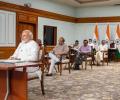
Nivedita Mookerji goes in search of the elusive war room to track and respond to the coronavirus threat.

Retailers are also demanding that home delivery across all forms of retail should be allowed to ensure a level playing field.

Data from market research agency Nielsen shows that 152 new players entered the hygiene market in March as the lockdown was implemented to contain the spread of the coronavirus disease. The trend is expected to continue, the agency says, as hygiene and health emerge as key themes.
While FMCG companies were not barred from carrying out their operations during the 21-day lockdown, since most manufacture staples and essential products, capacity utilisation remained poor, owing to the restricted movement of raw materials, finished goods, and labour.

'Clearly, the next few months will be very challenging for industry.' 'We are clearly in a phase where recovery is a dream.'

Top companies reported that despite most of them making staples and essential products, movement of raw material, goods and labour remained restricted, impacting sales.

A single format and simpler, uniform rules would have kept the service going. In other parts of the world including in the US, managing demand and capacities along with ensuring preventive measures were an issue, but there was hardly any administrative hurdle anywhere.

Overcrowding, unsanitary conditions in Asia's largest slum pose big challenges to containment.

In the last one week several companies have had to face the hurdle of making a distinction between what's essential and what's not. To help them the government has now clarified that grocery would include hygiene products such as hand wash, soaps, disinfectants, body wash, shampoo, surface cleaners, detergents, tissue paper, toothpaste, oral care, sanitary pads, diapers, chargers and battery cells, etc.

News viewership was the biggest gainer during the first full week of lockdown, growing 298 per cent versus the pre-COVID period between January 11 and 31. Ramayana, whose rerun has begun on Doordarshan, was the top-rated show on Saturday and Sunday.
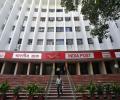
Changing with the times and in compliance with social distancing norms, customers are now picking up their parcels, speed posts and registered letters within the city themselves after they are informed on phone.

Cancellation of at least Rs 3,000-crore worth of business has happened in the past few weeks.
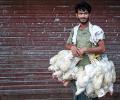
Weak demand from the poultry sector has resulted in a sharp decline in feed prices too, with both soybean and maize prices falling by nearly 25 per cent in the past two months. The poultry market consumes around half of soybean and maize production in India.

'There is a clear business impact. People are avoiding crowded places and gatherings across cities. This is hitting business, both at traditional and modern trade outlets, during the Holi season, which kicked off from Saturday,' says Praveen Khandelwal, general secretary, Confederation of All India Traders (CAIT).
 © 2025 Rediff.com - Investor Information - Advertise with us - Disclaimer - Privacy Policy - Sitemap - Feedback - About us - Terms of use - Grievances